
Optimizing Charts for Multiple Asset Classes
The organizational issues associated with managing multiple asset classes in a single analysis framework are those that single-market traders seldom have to deal with, and multi-market traders are invariably underestimated until the complexity becomes too great to be dealt with by informal habits. Every forex pair, equity index, commodity and fixed income product has its behavioral characteristics, liquidity cycle and volatility cycle and a workspace constructed without taking into consideration those distinctions creates friction which multiplies each session. The trader who approaches multi-asset analysis with deliberate structural thinking from the outset works with a clarity that those who allow their workspace to develop organically through accumulated habits rarely achieve.
Organizing the workspace by asset class rather than arbitrary instrument groupings enables faster chart reading during fast-moving sessions. When every currency pair is assigned its own designated area on the layout, all equity indices are assigned another, and commodities another, the mind develops a spatial sense of where information lives, reducing cognitive load when critical data needs to be recalled quickly. Over time, that spatial organization develops into a reading efficiency that feels natural rather than forced, but requires an upfront investment in conscious organization that many traders never get around to, favoring more immediately productive activities.
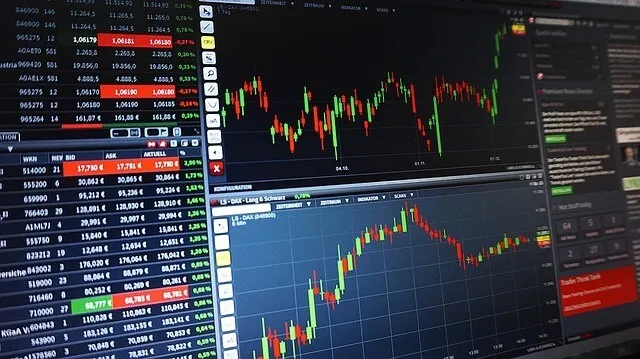
Image Source: Pixabay
Volatility calibration across asset classes requires adjusting chart scale, indicator periods, and alert levels on an instrument-specific basis rather than applying uniform settings. A default ATR period that produces meaningful volatility readings for a major forex pair may be entirely unsuitable for crude oil, which moves differently and responds to a different set of catalysts. By applying the same indicator settings across all asset classes, traders are implicitly assuming that the markets they are dealing with are similar enough in their behavior to warrant a consistent approach, an assumption that fails almost immediately under scrutiny and produces indicators that are well-calibrated for some markets and poorly calibrated for others.
Correlation awareness shapes multi-asset workspace structure in ways that go beyond simple asset class segmentation. Placing correlated instruments adjacent to one another in the layout, such as the Canadian dollar next to crude oil or gold next to Treasury instruments, creates visual proximity that makes divergences and confirmations immediately apparent rather than forcing the mind to cross-reference between distant parts of the workspace. When a typically reliable correlation begins to break down, the close physical placement of the instruments makes the breakdown visible at a glance rather than requiring active cross-referencing, which is the kind of passive monitoring that allows inter-market developments to be tracked without deliberate attention. TradingView charts support this approach through customizable multi-panel layouts that allow correlated instruments to be grouped and monitored side by side within a single workspace.
A multi-asset trader explained his rearrangement of his working environment after realizing that his previous structure was constructed based on the familiarity with instruments instead of analytical reasoning. The most frequently viewed instruments had been given the largest screen areas regardless of their analytical relationships to other instruments, and therefore the inter-market dynamics most relevant to his trading required active monitoring rather than being naturally visible in the workspace. As soon as the layout was restructured using correlation groups and session timing, the information which previously needed to be actively cross-linked through conscious means was passively available through the spatial logic of the layout as such.
Managing timeframe consistency across asset classes involves choosing whether to standardize timeframes for all instruments or to calibrate them to asset-class-specific move durations. Standardization simplifies the analytical process and makes cross-asset timeframe comparisons straightforward; however, it can produce suboptimal results when instruments with naturally different rhythms and speeds are involved. A commodity with meaningful weekly trends may be better analyzed on weekly and daily charts, whereas a currency pair used in short-term setups may be better suited to four-hour and one-hour charts, and both approaches should coexist within a coherent workspace that can accommodate different timeframe arrangements without creating visual inconsistency that confuses rather than clarifies. This is made viable via TradingView charts where traders can save and swap between layout templates that are set to various different asset classes without affecting the workspace setup in a disruptive manner.
The analytical discipline used in trade reviews must be applied to workspace audits, showing configuration drift that gradually builds up as instruments are added, removed or deprioritized without similarly changing the overall layout logic. A workspace designed to a particular three-asset-class strategy might in six months have become cluttered and disorderly as a result of the accumulation of the incremental additions that all appeared rational at the time but when combined together lead to the loss of the structural clarity of the original design. The organizational benefits of a deliberate layout design are preserved by treating the workspace as a tool requiring regular maintenance rather than a fixed infrastructure that can be left unattended.

Comments