
Three, Four, or Five Axes? Choosing the Right CNC Route for Complex Geometry
More machine axes do not automatically make a better part. The right choice depends on which faces require machining, how often the workpiece must be repositioned, and whether angled or contoured features need continuous tool access. CSMolding offers 3-, 4-, and 5-axis CNC machining, so the useful question is not “Which is most advanced?” but “Which configuration creates this geometry with the fewest risky setups?”
Three-axis work remains the efficient baseline
Three-axis machines move the cutter along X, Y, and Z while the part stays in a fixed orientation. They are well suited to plates, pockets, drilled patterns, planar faces, and many housings. When most features are reachable from one or two orientations, a straightforward setup can be faster and easier to inspect than a more elaborate multi-axis program.
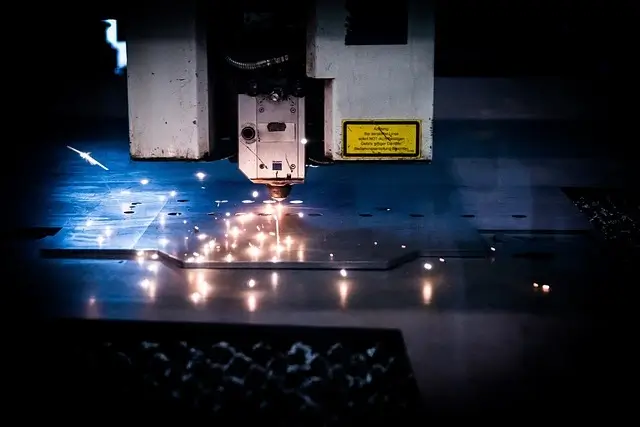
Image Source: Pixabay
Designers can help by aligning related holes and pockets on common faces. This reduces reorientation and makes fixturing simpler. It also gives the process engineer more freedom to use rigid, shorter tools.
A fourth axis can remove repeated handling
A rotary axis allows the workpiece to index or rotate, making features around a circumference or on several sides easier to reach. Components with repeated side holes, flats, or radial details can benefit because the machine establishes those orientations without multiple manual setups. Fewer setups may reduce accumulated positioning error and operator handling.
Five-axis access is about geometry and setup reduction
Five-axis machining becomes valuable for angled faces, compound contours, impeller-like forms, complex medical or aerospace geometry, and parts where several sides must relate closely. The cutter or workpiece can approach from changing angles, improving access to features that would otherwise require custom fixtures or many operations.
That capability should still be justified. A part designed with unnecessary sculpted surfaces can be expensive even on a capable machine. Conversely, splitting a genuinely complex component into many three-axis setups may add its own cost and risk.
The best DFM conversation therefore begins with feature access. Identify the functional surfaces, ask how many orientations they require, and consider whether combining setups improves quality or merely adds programming sophistication. Axis count is a manufacturing decision, not a status symbol; the simplest process that reliably produces the design is usually the strongest one.


Comments