How to Manage Trading Across Different Global Market Sessions
The foreign exchange market trades around the clock during the working week, but activity is not evenly distributed. Each global session brings a different mix of banks, companies, funds, and economic releases. A strategy that performs well during London may behave quite differently when the same pair trades through a quieter Asian afternoon.
For online forex trading, session awareness is less about memorizing clock times than understanding who is active and where liquidity is concentrated. Tokyo, London, and New York each create distinct conditions, while daylight-saving changes can shift their relationship to a trader’s local time.
Asia Often Establishes the Early Range
The Asian session is typically most active in the yen, Australian dollar, and New Zealand dollar, especially when regional data or central bank news is released. EUR/USD and GBP/USD may trade more quietly, although a major global headline can disrupt that pattern immediately.
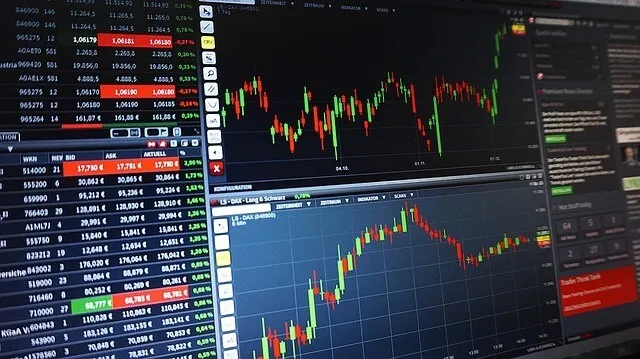
Image Source: Pixabay
Lower activity is not the same as no opportunity. Price often builds a range that later becomes a reference for European traders. The Asian high and low can attract stops, breakout orders, and profit-taking when London liquidity arrives.
Beginners sometimes interpret a narrow overnight range as evidence that the entire day will remain quiet. Experienced traders see compressed movement as stored positioning. They ask whether London will accept the range or sweep one side before establishing a different direction.
The range is information, not a promise.
London Brings Liquidity and False Starts
London handles a substantial share of global currency activity, and its opening hours often produce faster price discovery in euro and sterling pairs. European economic releases, institutional order flow, and the adjustment of positions carried from Asia can expand both volume and volatility.
Consider GBP/USD trading inside a 35-pip Asian range before weaker-than-expected UK retail sales data. The pair falls below the Asian low as London opens, triggering sell stops and attracting breakout traders. Ten minutes later, it climbs back inside the range because the weak data were widely anticipated and buyers were waiting below support.
The first move found liquidity. It did not necessarily establish direction.
When price returns inside a broken range, experienced traders watch whether the failed breakout forces late sellers to exit. Beginners are more likely to treat the first break as confirmation and then widen the stop when the market rejects it.
This is one reason orders placed just before a major session opens deserve extra room or smaller size. Spreads may remain competitive, yet candle ranges can expand sharply as more participants enter.
The London and New York Overlap Changes the Pace
The overlap between London and New York usually brings some of the week’s deepest liquidity. US economic data often arrive during this period, while European desks are still active. Major pairs can move quickly because both regions are adjusting positions at once.
Deep liquidity does not guarantee calm execution.
A US inflation surprise can push Treasury yields and the dollar higher within seconds. EUR/USD may break a London support level, rebound as early sellers take profit, then continue lower once New York cash markets reinforce the rate move. A stop based on the quieter hours before the release may be too tight for the new environment.
Counterintuitively, the busiest session is not always the best time to enter. High liquidity can improve spreads, but it also attracts the largest volume of news-driven orders. A trader who needs slow confirmation may make better decisions after the initial overlap volatility has settled.
Late Sessions Require Different Expectations
After London closes, activity in European currency pairs often fades unless US news or a strong risk move keeps the market engaged. Price may continue trending, but it can also drift, retrace, or become more sensitive to smaller orders as participation declines.
Targets should reflect the remaining session. Expecting another 70 pips from EUR/USD late in New York is difficult when the pair has already completed most of its daily range and no major catalyst remains. Holding for the original target may convert a strong intraday position into an overnight exposure.
For practical online forex trading preparation, build a schedule showing each session in the platform’s server time and local time. Recheck it when daylight-saving changes occur. Mark the Asian range, scheduled European and US releases, the London close, and the pair’s average movement during each period.
Before entering, note which participants are active, how much of the daily range has already been used, and whether the next session is likely to add or remove liquidity. If a position must survive a session handover, reduce the size or widen the stop only when the revised monetary risk remains within the original limit.